

Wheel Bolt Patterns Explained: A Complete Guide to PCD
Before anything else, diameter, width, offset, finish, your wheel has to physically mount to your car. That starts with the bolt pattern. Get it wrong and nothing else matters. Get it right and you’ve cleared the first and most fundamental hurdle in wheel fitment.
This guide covers what bolt pattern (also called PCD) actually measures, how to read the notation, why common patterns like 5×114.3, 5×112, and 5×120 exist in the first place, the geometry behind why they can’t be swapped, and exactly how to confirm your car’s pattern before you buy. There’s also a full manufacturer reference table organized by platform.
What Is a Wheel Bolt Pattern (and What Does PCD Stand For)?
A bolt pattern describes two things at once: how many lug holes a wheel has, and the diameter of the imaginary circle passing through the center of each one. That circle is the Pitch Circle Diameter, or PCD for short. It’s the engineering term for what the aftermarket calls bolt pattern, lug pattern, or stud pattern. All four terms describe the same measurement.
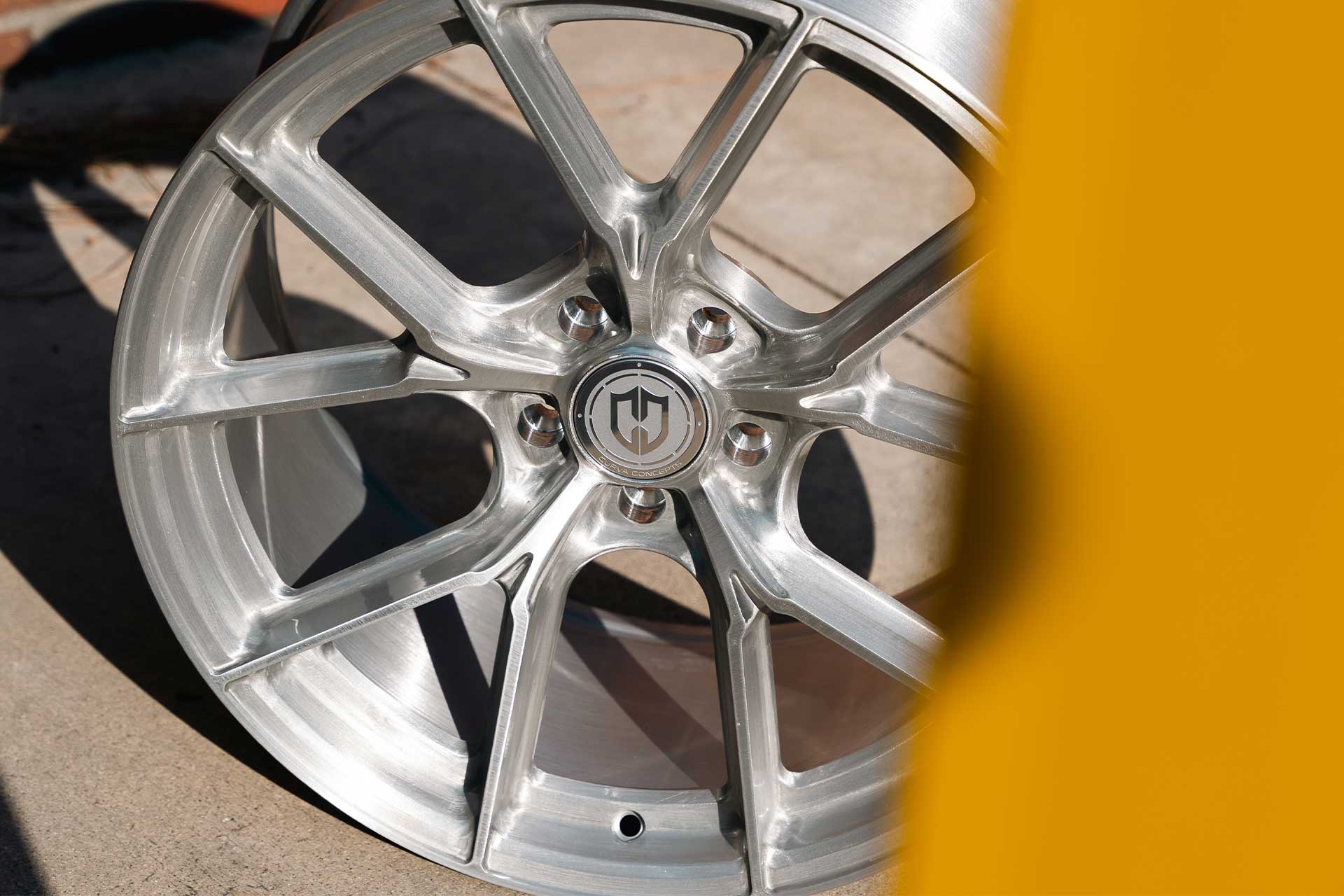
You’ll see it written as two numbers separated by an “x”: 5×114.3, for example. The “5” is the lug count. The “114.3” is the bolt circle diameter in millimeters. That same measurement in inches is 5×4.5. Same wheel, same hub, different notation depending on whether the person who spec’d the vehicle thought in metric or imperial.
Breaking Down the Notation
The number before the “x” only has a few possibilities: 4, 5, 6, 8, or 10 lugs. Most passenger cars and performance vehicles run 5. The number after the “x” is always a diameter in millimeters unless the spec sheet explicitly says inches. If you see a number under 10 after the “x,” it’s inches: 5×4.5 is the same as 5×114.3.
Common bolt patterns you’ll encounter on the platforms Curva covers:
- 5×114.3: JDM and domestic standard: Ford Mustang (all generations), Subaru WRX, Hyundai Veloster N, Tesla Model 3, Nissan Z, Mazda MX-5
- 5×112: Modern European standard: BMW G-generation (M340i, M3, M4), Toyota GR Supra, Audi A3/S3/RS3, VW Golf R, Mercedes C-Class
- 5×120: Transition-era BMW (E/F-chassis), Chevrolet Camaro, Honda Civic Type R (FK8/FL5)
- 5×100: Subcompact sport: Toyota GR86, Subaru BRZ, older VW/Audi platforms
- 5×130: Porsche-exclusive: 911, Cayman, Boxster, Cayenne
How to Measure Your Bolt Pattern
The measurement method depends on lug count. Even-lug patterns (4, 6, 8) are straightforward; measure from the center of one lug hole to the center of the hole directly across from it. That center-to-center distance is your PCD.
Five-lug patterns are trickier because no two holes sit directly opposite each other. There’s a specific method that works without specialized tools:
- Place a ruler at the center of one lug hole.
- Measure to the far outer edge (not the center) of the lug hole directly across from it (skipping one hole on each side).
- Multiply that measurement by approximately 1.05 for a refined result.
If that sounds like it leaves room for error, it does. The most accurate confirmation comes from one of two sources: your door jamb sticker or owner’s manual (which lists PCD as part of the OEM wheel spec), or a direct lookup on wheel-size.com by year, make, model, and trim. Physical measurement is a backup when documentation isn’t available — not the preferred starting point. Our Wheel Fitment Research for Dummies guide walks through the full verification workflow if you want the complete process.
Not sure what pattern your car runs? Check your driver’s door jamb sticker or head to wheel-size.com and search your year, make, model, and trim for instant confirmation.
Why 5×114.3, 5×112, and 5×120 Aren't the Same
The obvious question: why do manufacturers use different bolt patterns instead of standardizing on one? The short answer is platform engineering. Bolt patterns are determined at the chassis design stage based on load requirements, stud size, hub geometry, and in some cases, regional manufacturing standards that calcified over decades.
5×114.3 became the de facto JDM and North American standard because Japanese and American manufacturers converged on similar hub sizes during the 1970s and 1980s. 5×112 is the modern European standard, BMW, Mercedes, and Volkswagen Group all use it on current platforms. The 2.3mm gap between them exists not by accident but because the underlying hub engineering went through separate development cycles on different continents.
What this means practically: a 5×112 wheel from a G20 BMW will not correctly mount on a 5×114.3 hub from a Ford Mustang. Not with a little persuasion. Not with oversized lug nuts. The geometry is incompatible, and the engineering consequences are real; covered in the next section.
The JDM Standard: 5×114.3
Used across the majority of Japanese-origin sport and performance vehicles, plus most Ford and Hyundai performance models. One of the most widely manufactured aftermarket wheel PCDs globally. If your car is a Mustang, WRX, Veloster N, Tesla Model 3, Nissan Z, or most Honda/Mazda platforms, this is your pattern. The Curva Mustang Fitment Guide, Subaru WRX Fitment Guide, and Hyundai Veloster N Fitment Guide all cover 5×114.3 builds with confirmed setups.
The European Standard: 5×112
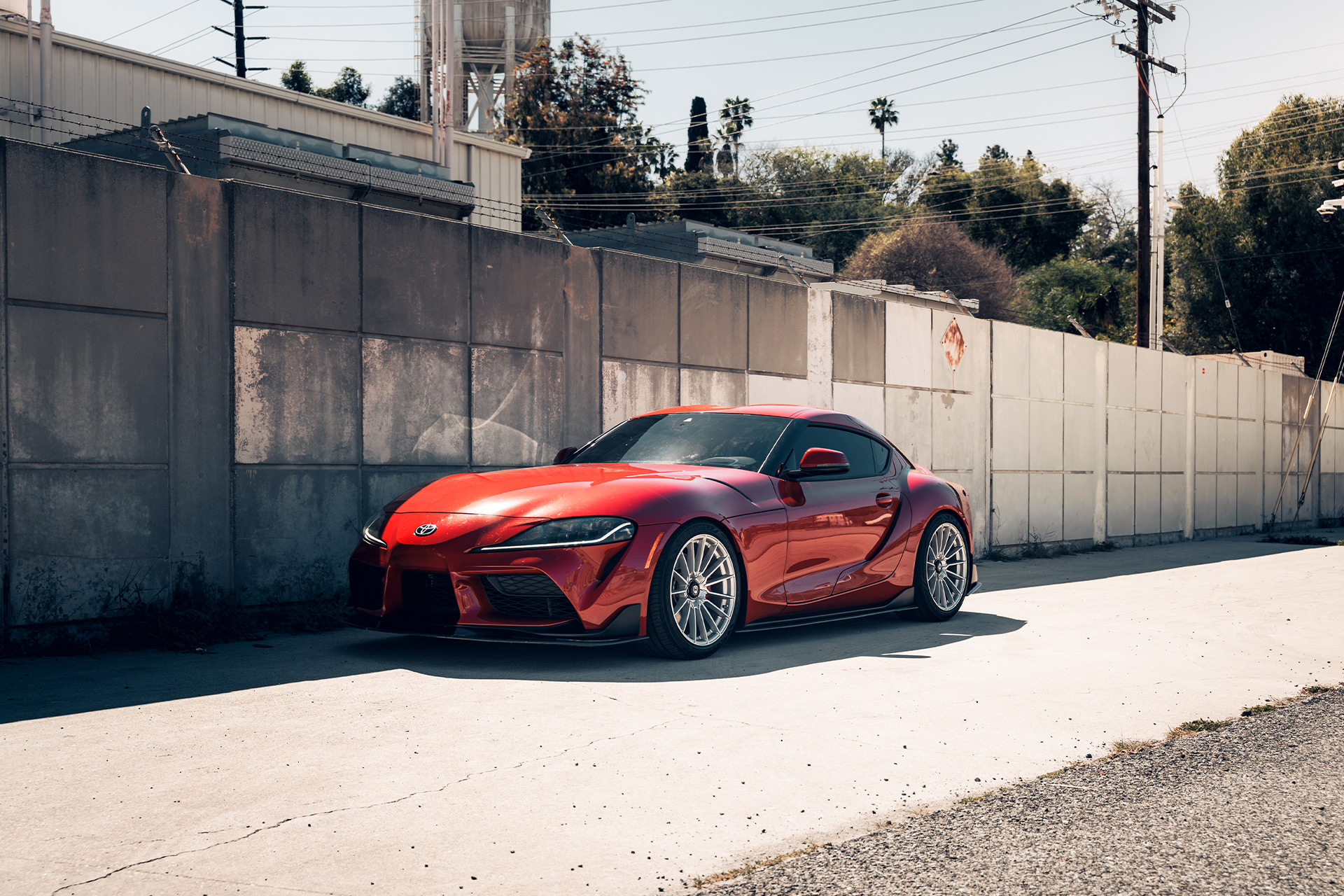
The dominant pattern for modern BMW, Audi, VW, and Mercedes platforms. Worth noting: the Toyota GR Supra (A90/A91) uses 5×112, not 5×114.3, because it’s built on BMW’s B58-based platform and shares hub architecture. If you’re building a Supra, BMW M340i, or Audi S3, you’re shopping 5×112. See the GR Supra Fitment Guide, BMW M340i Fitment Guide, and Audi S3 Fitment Guide for confirmed wheel setups on each platform.
The Split Standard: 5×120
This one appears across two distinct communities: older BMW E and F-chassis cars (E46, E90, F30, F10) and select GM performance vehicles (Camaro) plus the Honda Civic Type R (FK8 and FL5). The FK8/FL5 Type R shifted away from 5×114.3 specifically to allow wider track widths without requiring aggressive offsets. See the Civic Type R Fitment Guide for that build.
The Geometry of Why Bolt Patterns Can't Be Mixed
This is where “close enough” stops being a valid concept. The bolt pattern is a precision kinematic constraint, it defines a circle, and every lug hole sits on that circle at equal angular intervals. The hub’s studs sit on the same circle. When both circles match exactly, each lug nut seats flush on its full contact surface and distributes clamping force equally across all five fasteners.
That equal distribution is what creates a secure friction grip at the wheel mounting face. The studs don’t resist cornering or braking forces directly; the clamped interface between wheel and hub does. The studs maintain preload; the friction surface does the actual work. Every aspect of how the system is engineered assumes the lug holes and studs are concentric.
What Happens When the PCD Doesn’t Match
Mount a 5×114.3 wheel on a 5×112 hub without an adapter and each lug hole shifts 1.15mm outward from its stud. That’s half of the 2.3mm total difference, distributed radially. The lug nut can no longer seat squarely in the chamfered hole; it contacts the wheel at an angle, concentrating stress on one edge of the lug seat instead of distributing it across the full taper or radius.
The downstream effects:
- Uneven clamping force: some lugs carry more preload than intended, others less. The nominal torque spec produces different actual clamp loads at each fastener.
- Fretting wear: angular contact at the lug seat initiates micro-movement under vibration. Over time, lug holes elongate and studs fatigue at the thread root.
- Runout: the wheel cannot sit concentrically on the hub. The 1.15mm radial offset translates to measurable lateral runout at the rim. Tire technicians balance wheels to runout tolerances under 0.3mm. A PCD mismatch introduces eccentricity that exceeds that threshold before the car moves.
The 2.3mm difference between 5×112 and 5×114.3 isn’t “close enough.” It’s enough to put the assembly outside the tolerance band that wheel mounting geometry requires to function correctly.
What a Bolt Pattern Adapter Actually Does to Your Hub Stack
An adapter solves the PCD mismatch by inserting a machined disc between hub and wheel: one face matches the vehicle’s bolt pattern, the other face presents the wheel’s required pattern. The minimum thickness to accommodate two separate bolt circles without overlap is typically 15–20mm.
That added thickness changes two things structurally:
Scrub radius shift: The scrub radius is the horizontal distance between your tire contact patch center and the steering axis projected to the ground. Adding 15–25mm of adapter pushes the wheel outboard, widening the scrub radius. A wider scrub radius increases the feedback forces from road camber and can make steering noticeably heavier and more sensitive to surface variations.
Wheel bearing moment arm: The wheel bearing supports both the vertical load of the vehicle and the bending moment created by how far the tire contact patch sits from the bearing centerline. That bending moment scales directly with outboard distance; it’s the same physics that makes high-positive-offset wheels easier on bearings and how offset actually affects fitment. An adapter adds outboard distance without the structural intent of a wheel engineered for that offset. The bearing carries more bending moment than it was designed for, and fatigue life shortens accordingly.
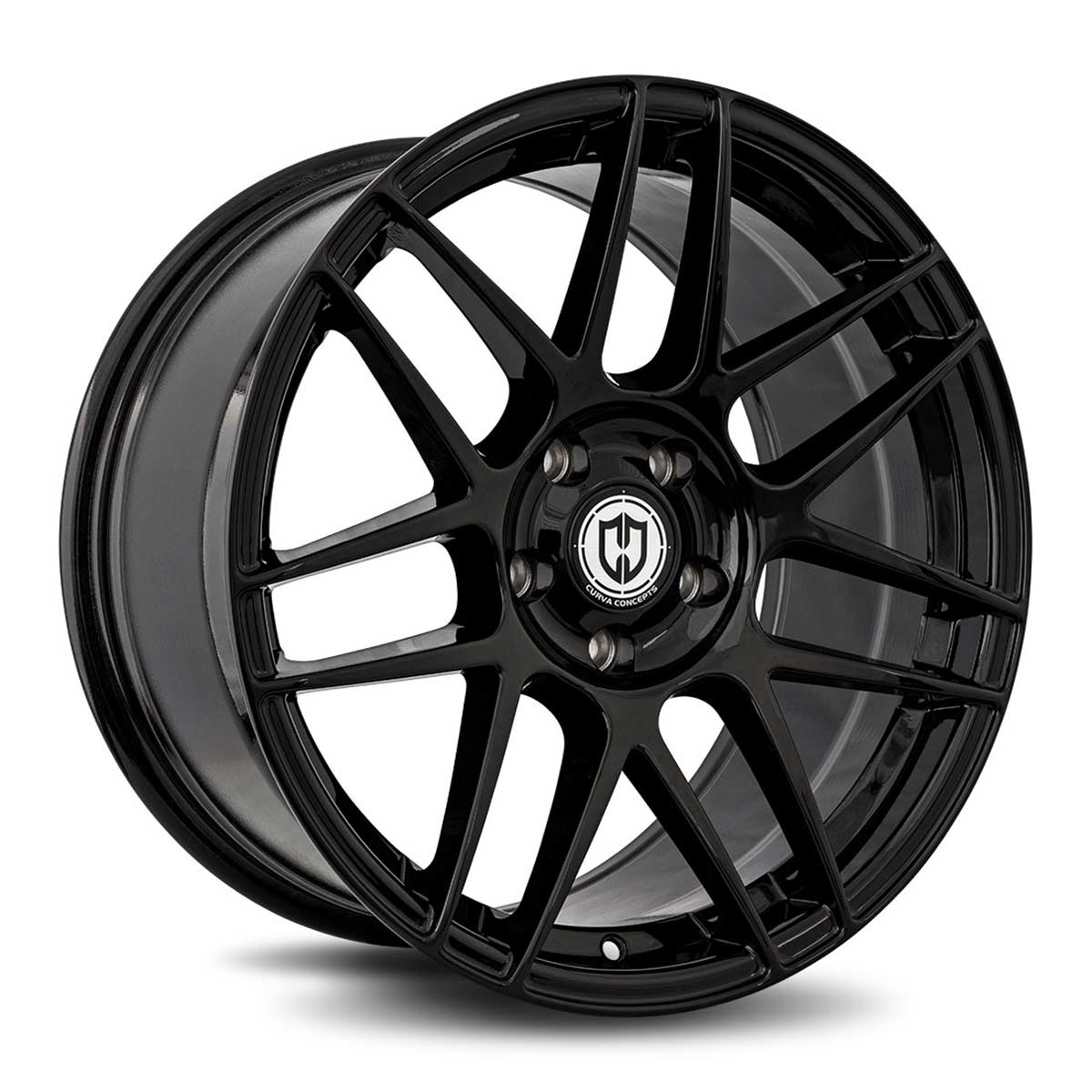
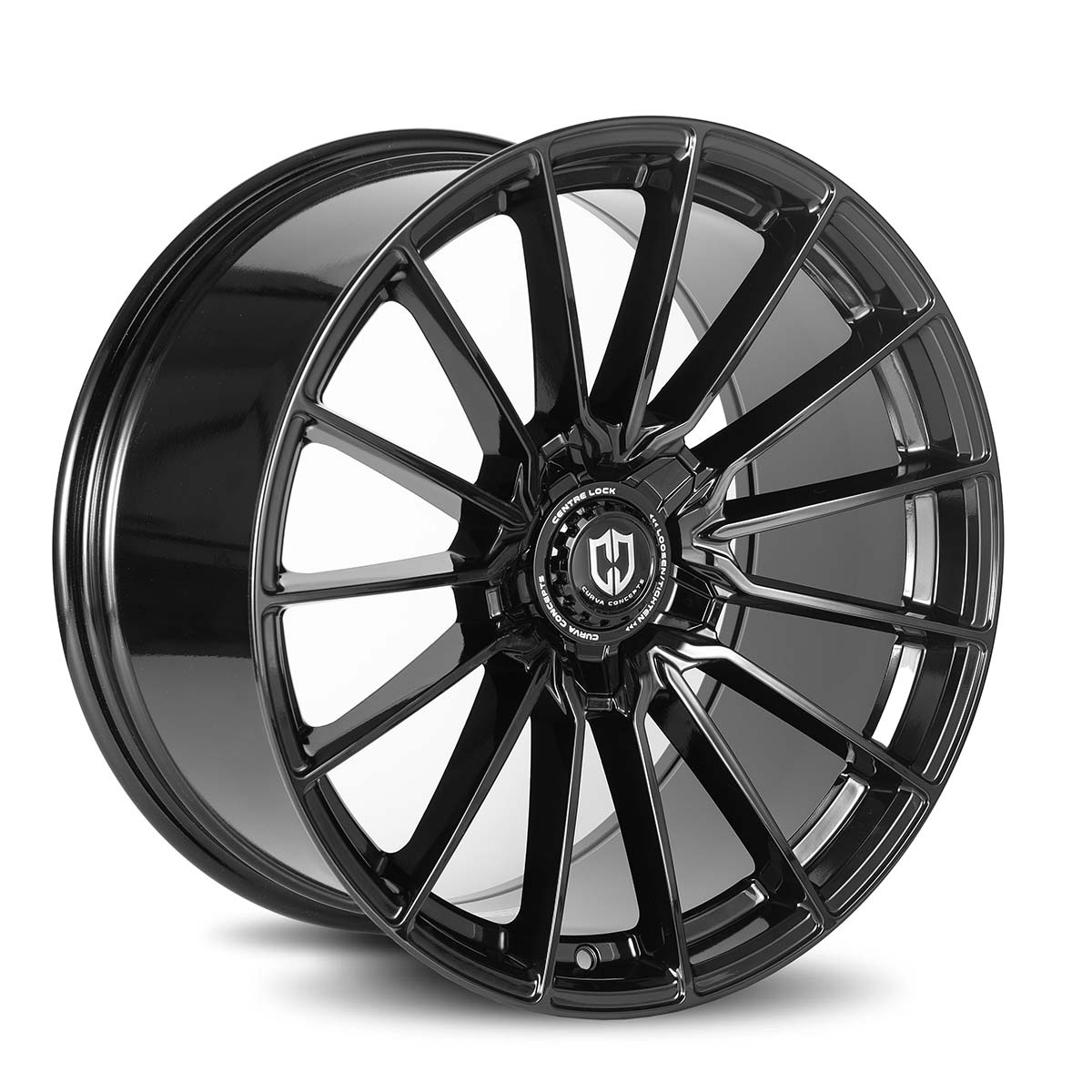
The reason most people reach for an adapter is not finding enough wheel options in their specific PCD, which is a solvable problem. Curva’s Classic Series and Flow Forged line are manufactured across 5×112, 5×114.3, and 5×120 specifically so the right pattern exists in the wheel you actually want, without adding to your hub stack.
For a deeper look at how hub load paths work and why hub-centric fitment matters, see the Hub-Centric vs. Lug-Centric Wheels guide. For lug hardware specifics, the Wheel Hardware and Lug Seat Types guide covers seat geometry in detail.
Bolt Pattern Reference Table by Platform
Organized by an enthusiast community. Find your platform, confirm the PCD, and check whether a Curva Fitment Guide exists for your specific build.
| Vehicle | Chassis / Gen | Bolt Pattern | Hub Bore | Fitment Guide |
|---|---|---|---|---|
| Toyota GR Supra | A90 / A91 | 5×112 | 66.6mm | Guide |
| Toyota GR86 | ZN8 / ZD8 | 5×100 | 56.1mm | Guide |
| Subaru WRX / STI | GR · GV · VA · VB | 5×114.3 | 56.1mm | Guide |
| Subaru BRZ | ZC6 / ZD8 | 5×100 | 56.1mm | — |
| Hyundai Veloster N | JS | 5×114.3 | 67.1mm | Guide |
| Hyundai Elantra N | CN7 | 5×114.3 | 67.1mm | — |
| Nissan 350Z / 370Z | Z33 / Z34 | 5×114.3 | 66.1mm | — |
| Nissan Z | RZ34 | 5×114.3 | 66.1mm | — |
| Honda Civic Type R | FK8 / FL5 | 5×120 | 64.1mm | Guide |
| Honda Civic / Accord | 10th / 11th Gen | 5×114.3 | 64.1mm | — |
| Mazda MX-5 Miata | NC / ND | 5×114.3 | 67.1mm | — |
| Infiniti Q60 / Q50 | V37 | 5×114.3 | 66.1mm | Guide |
| Kia Stinger | CK | 5×114.3 | 67.1mm | — |
| Lexus IS / GS | XE30 / GRS19 | 5×114.3 | 60.1mm | — |
| Mitsubishi Evo | VIII / IX / X | 5×114.3 | 67.1mm | — |
| Vehicle | Chassis / Gen | Bolt Pattern | Hub Bore | Fitment Guide |
|---|---|---|---|---|
| BMW M340i / 3 Series | G20 / G21 | 5×112 | 66.6mm | Guide |
| BMW M440i / 4 Series | G22 / G23 / G26 | 5×112 | 66.6mm | Guide |
| BMW M3 / M4 | G80 / G82 | 5×112 | 66.6mm | — |
| BMW 3 Series (F-chassis) | F30 / F31 / F34 | 5×120 | 72.56mm | — |
| BMW 3 Series (E-chassis) | E46 / E90 / E92 | 5×120 | 72.56mm | — |
| Audi S3 / RS3 | 8V / 8Y | 5×112 | 66.6mm | Guide |
| Audi A4 / S4 / RS4 | B9 / B10 | 5×112 | 66.6mm | — |
| Audi Q5 / SQ5 / Q8 | FY / 4M | 5×112 | 66.6mm | — |
| VW Golf R / GTI | Mk7 / Mk8 | 5×112 | 57.1mm | — |
| Mercedes C-Class | W205 / W206 | 5×112 | 66.6mm | — |
| Mercedes A45 / CLA | W177 / C118 | 5×112 | 66.6mm | — |
| Porsche 911 / Cayman / Boxster | 992 / 718 | 5×130 | 71.6mm | — |
| Volvo S60 / V60 / XC40 | P3 / SPA | 5×10⁸ | 63.4mm | — |
| Alfa Romeo Giulia / Stelvio | 952 / 949 | 5×110 | 65.1mm | — |
| Vehicle | Chassis / Gen | Bolt Pattern | Hub Bore | Fitment Guide |
|---|---|---|---|---|
| Ford Mustang | S197 · S550 · S650 | 5×114.3 | 70.5mm | Guide |
| Ford Mustang Mach-E | ME1 | 5×10⁸ | 63.4mm | Guide |
| Chevrolet Camaro | 5th / 6th Gen | 5×120 | 70.3mm | — |
| Dodge Challenger / Charger | LC / LX | 5×115 | 71.5mm | — |
| Dodge Durango / Jeep Grand Cherokee | WD / WL | 5×127 | 71.5mm | — |
| Cadillac CT5 / CT4 | Alpha II | 5×120 | 66.9mm | — |
| Vehicle | Trim / Gen | Bolt Pattern | Hub Bore | Fitment Guide |
|---|---|---|---|---|
| Tesla Model 3 | RWD · LR · P · Highland | 5×114.3 | 64.1mm | Guide |
| Tesla Model Y | All trims | 5×114.3 | 64.1mm | Guide |
| Tesla Model S | All trims | 5×120 | 64.1mm | — |
| Hyundai IONIQ 5 | NE1 | 5×114.3 | 67.1mm | — |
| Kia EV6 | CV | 5×114.3 | 67.1mm | — |
| Genesis G70 / GV80 | IK / JX1 | 5×114.3 | 67.1mm | — |
| Polestar 2 | All trims | 5×10⁸ | 63.4mm | — |
| Mustang Mach-E | ME1 | 5×10⁸ | 63.4mm | Guide |
Hub bore must also match, or be covered by a hub-centric ring. A wheel with the correct PCD but the wrong center bore will mount, but without a hub ring it’s lug-centric rather than hub-centric, which means the hub face isn’t carrying the vehicle’s weight. More on that in the Hub-Centric vs. Lug-Centric guide.
How to Confirm Your Car's Bolt Pattern Before You Buy
There are three reliable methods, in order of accuracy:
- Door jamb sticker or owner’s manual: Your OEM wheel spec is printed on the certification label inside the driver’s door jamb. It lists diameter, width, offset, PCD, and load rating. If you can read it, this is your ground truth.
- Database lookup: wheel-size.com indexes factory specifications for virtually every vehicle sold globally. Search by year, make, model, and trim — it returns PCD, hub bore, OEM offset range, and the factory tire size in one lookup. Takes 90 seconds.
- Physical measurement: Use the method described in the How to Measure section above — center-to-outer-edge on a 5-lug wheel, multiplied by 1.05. Measure in millimeters to avoid conversion errors. Use this as confirmation, not as your primary source.
Once you have the PCD confirmed alongside hub bore, offset range, and diameter; check fitment with our calculator before you order. The full pre-purchase workflow is in Wheel Fitment Research for Dummies,it’s the 30-minute process that eliminates nearly every fitment mistake before it happens.
Frequently Asked Questions
What does 5x114.3 mean on a wheel?
The "5" is the number of lug holes on the wheel. "114.3" is the diameter in millimeters of the imaginary circle passing through the center of each hole — also called the Pitch Circle Diameter, or PCD. The same measurement in inches is 5×4.5. Both notations describe the same bolt pattern; the difference is only metric vs. imperial.
What is PCD on a wheel?
PCD stands for Pitch Circle Diameter — the engineering term for bolt pattern. It is the diameter of the circle that passes through the center of all lug holes on a wheel or hub. PCD and bolt pattern are the same measurement. The aftermarket tends to use "bolt pattern" or "lug pattern"; engineers and European spec sheets tend to use "PCD."v
Are bolt patterns universal?
No. Each vehicle uses a specific bolt pattern that must match the wheel exactly. Even a 2.3mm difference — the gap between 5×112 and 5×114.3 — means wheels are not interchangeable without an adapter. Both the lug count and bolt circle diameter must match for correct hub engagement and clamping force distribution.
What is the difference between 5x112 and 5x114.3?
The bolt circle diameter differs by exactly 2.3mm. 5×112 is the standard for most modern European vehicles — BMW G-generation, Audi, VW Golf R, Mercedes. 5×114.3 is standard across most JDM and American platforms — Ford Mustang, Subaru WRX, Nissan Z, Tesla Model 3. Despite the small gap, the two patterns are structurally incompatible and cannot be mixed without an adapter.
What cars use 5x114.3?
5×114.3 is one of the most common bolt patterns in the world. It's used on the Ford Mustang (all S197, S550, and S650 generations), Subaru WRX and WRX STI, Hyundai Veloster N, Tesla Model 3 and Model Y, Nissan 350Z, 370Z, and Z (RZ34), Mazda MX-5 Miata, Honda Accord, Infiniti Q60, Kia Stinger, and Genesis G70/GV80, among others.
What cars use 5x112?
5×112 is the dominant pattern for modern European performance vehicles: BMW M340i and all G-generation 3/5/7 Series, the Toyota GR Supra A90/A91 (which uses BMW's platform), Audi A3, S3, RS3 (8V and 8Y), Volkswagen Golf R (Mk7/Mk8), Mercedes-Benz C-Class (W205/W206), and Audi Q5/Q8/SQ8. Note that hub bore varies between brands even within the same PCD — always confirm hub bore alongside PCD.
How do you measure a 5-lug bolt pattern?
Place a ruler at the center of one lug hole and measure to the far outer edge — not the center — of the hole directly across from it. Multiply that measurement by approximately 1.05 for an accurate result. Measure in millimeters. For even-lug patterns (4, 6, 8 lugs), use a standard center-to-center measurement across directly opposite holes.
How do I find my car's bolt pattern?
Check the driver's door jamb sticker or your owner's manual — bolt pattern is listed as part of the OEM wheel spec. Alternatively, search your year, make, model, and trim on wheel-size.com for an instant lookup. For physical confirmation, use the measurement method above. For a full fitment research workflow, see our Wheel Fitment Research for Dummies guide.
Can you use a wheel with a different bolt pattern using an adapter?
Technically yes — adapters exist for most common pattern conversions. However, any adapter adds 15–20mm or more to the hub stack, increases the moment arm on the wheel bearing, and if improperly spec'd, results in lug nuts that cannot seat flush on the correct taper angle. For extended street or performance use, a wheel in the correct bolt pattern is the structurally correct solution. The adapter approach trades engineering integrity for convenience, and the physics of bearing fatigue don't care about the trade.
What bolt pattern does the Ford Mustang use?
All Ford Mustang generations — S197 (2005–2014), S550 (2015–2023), and S650 (2024+) — use 5×114.3 with a 70.5mm hub bore. The same pattern is sometimes written as 5×4.5 in imperial. The Mustang Mach-E is a separate platform and uses 5×10⁸ — it does not share a bolt pattern with the ICE Mustang. Full confirmed wheel fitments for the Mustang are in the Curva Mustang Fitment Guide.
Get Setup The Right Way
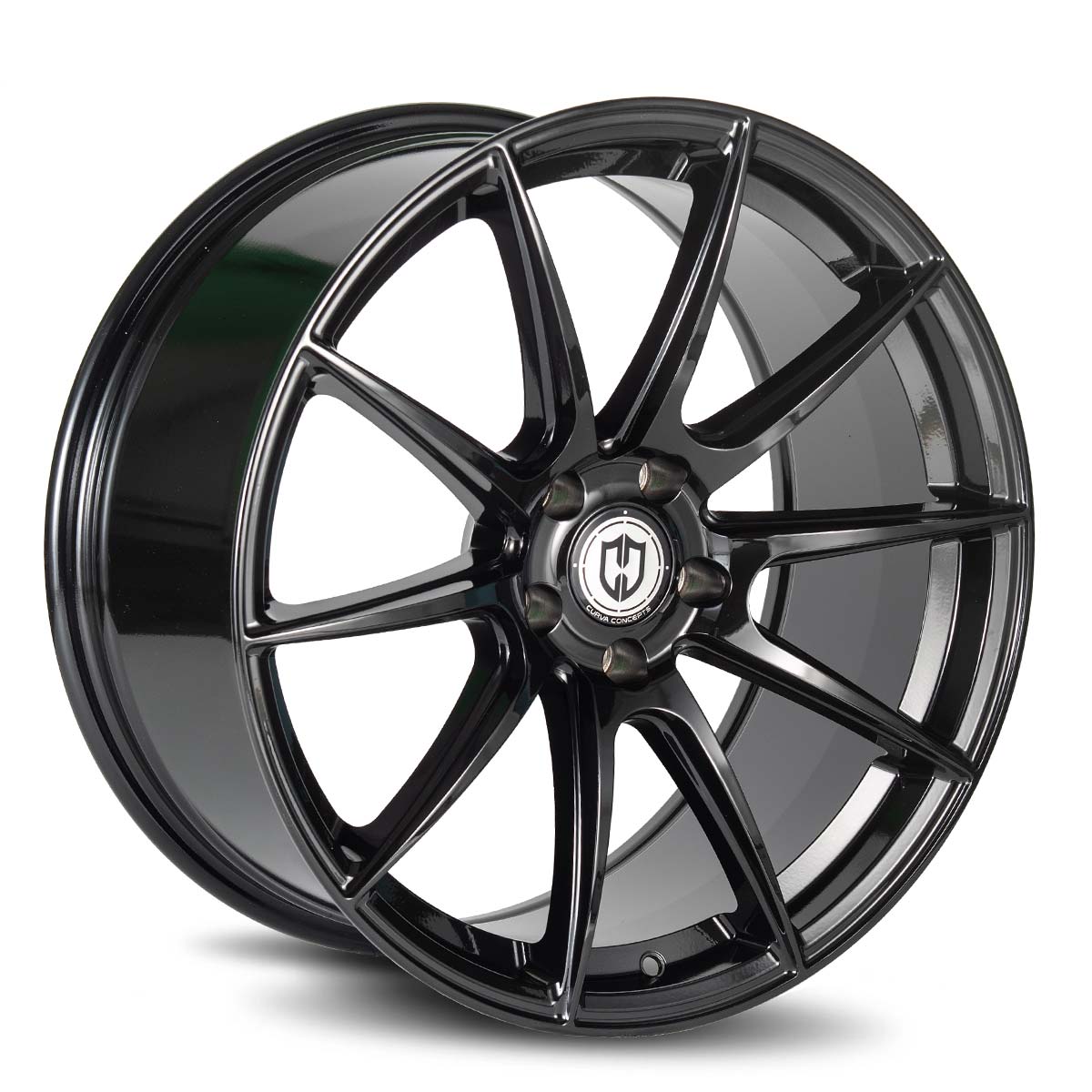
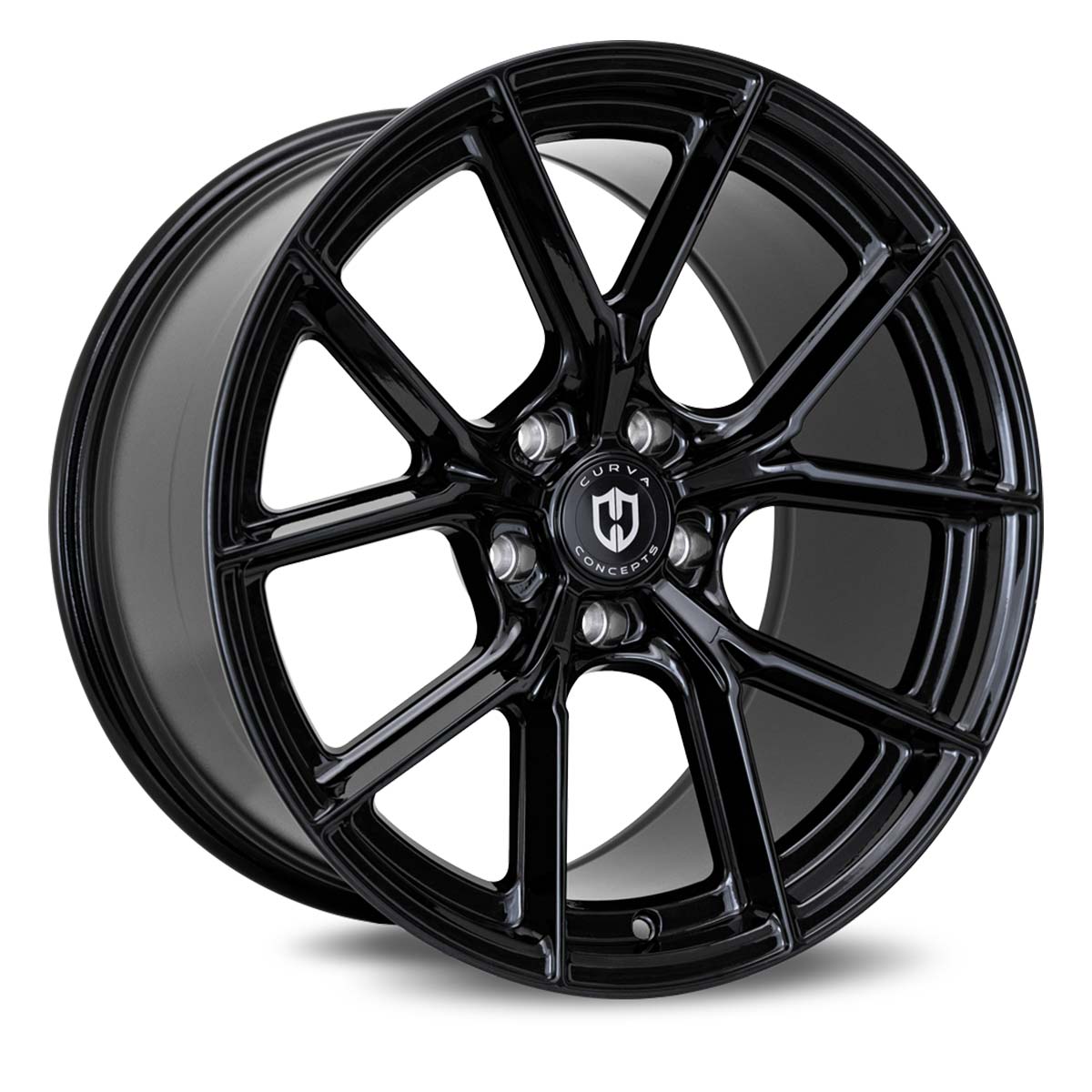
Still need help figuring out which bolt pattern you need? Contact the fitment team for expert guidance on the exact bolt pattern your vehicle requires and learn about the rest of the wheel specs that matter. If you’re still in the research phase of the wheel shopping journey, check out our wheel collection for a wide variety of sizes, fitments and finishes.