

Staggered vs Square Wheel Setups: Which Is Right for Your Car?
Choosing between a staggered vs square wheel setup is one of the first real decisions you’ll make when speccing aftermarket wheels. It affects how your car handles, how often you replace tires, and how much effort goes into getting your fitment right. The answer depends on your drivetrain, your driving style, and what trade-offs you’re comfortable with.
This guide breaks down what staggered, square, and reverse staggered fitments actually mean, which drivetrains pair best with each, and how to think about offsets when the front and rear aren’t the same size.
What Is a Staggered Fitment?
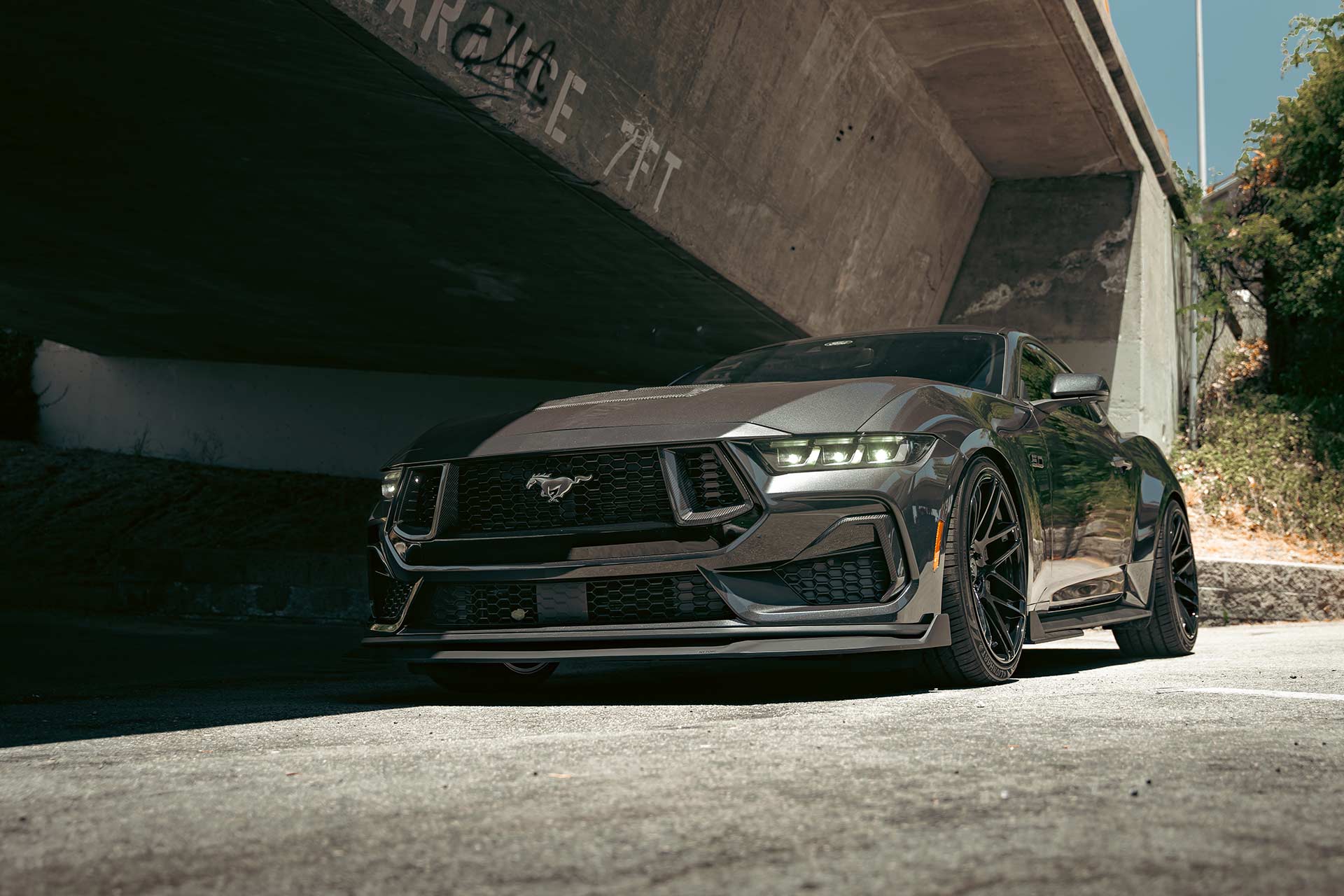
A staggered fitment runs wider wheels and tires on the rear axle than the front. The fronts and rears use different widths, and often different offsets, on the same car. It is the opposite of a square setup, where all four corners run identical wheel and tire sizes.
The reason comes down to where the power and the grip need to be. On a rear-wheel-drive car, the wider rear puts more rubber down for traction under acceleration and helps the car put power to the ground without spinning. The narrower front keeps steering quick and direct. You see staggered setups on a lot of muscle cars, sports coupes, and rear-drive sedans for exactly this reason.
A staggered look also has a visual payoff. The wider rear gives the car a planted, aggressive stance that a square setup does not. That combination of function and look is why “staggered fitment” is one of the first terms enthusiasts run into when they start shopping wheels.
What Is a Square Wheel Setup?
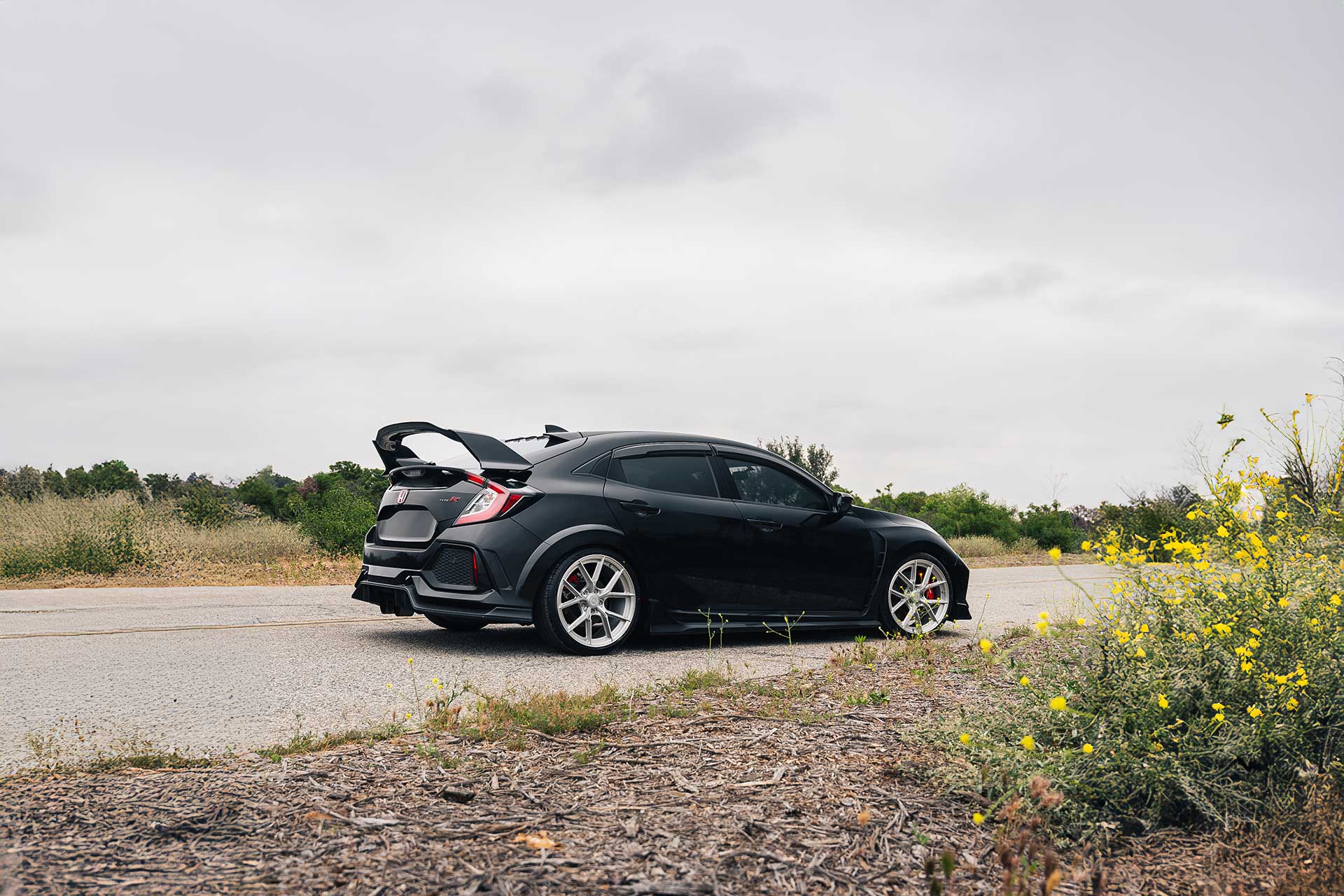
A square setup uses the same wheel width, diameter, and tire size on all four corners. If the fronts are 19×9.5 with 265/40 tires, the rears are identical.
This is the most common factory configuration across the entire automotive market, including many performance trims. Square makes sense as a default because it simplifies tire management, balances handling characteristics, and keeps maintenance costs predictable. For track-focused builds, square setups hold a real advantage: equalizing front grip to match the rear creates a more neutral, balanced car through corners.
Can You Run a Staggered Setup on AWD?
This is where staggered fitments get tricky, and where most guides leave you hanging.
On a rear-wheel-drive car, staggered is straightforward. The front and rear axles are not mechanically linked, so different tire sizes front to rear cause no driveline problems. Run whatever clears and looks right.
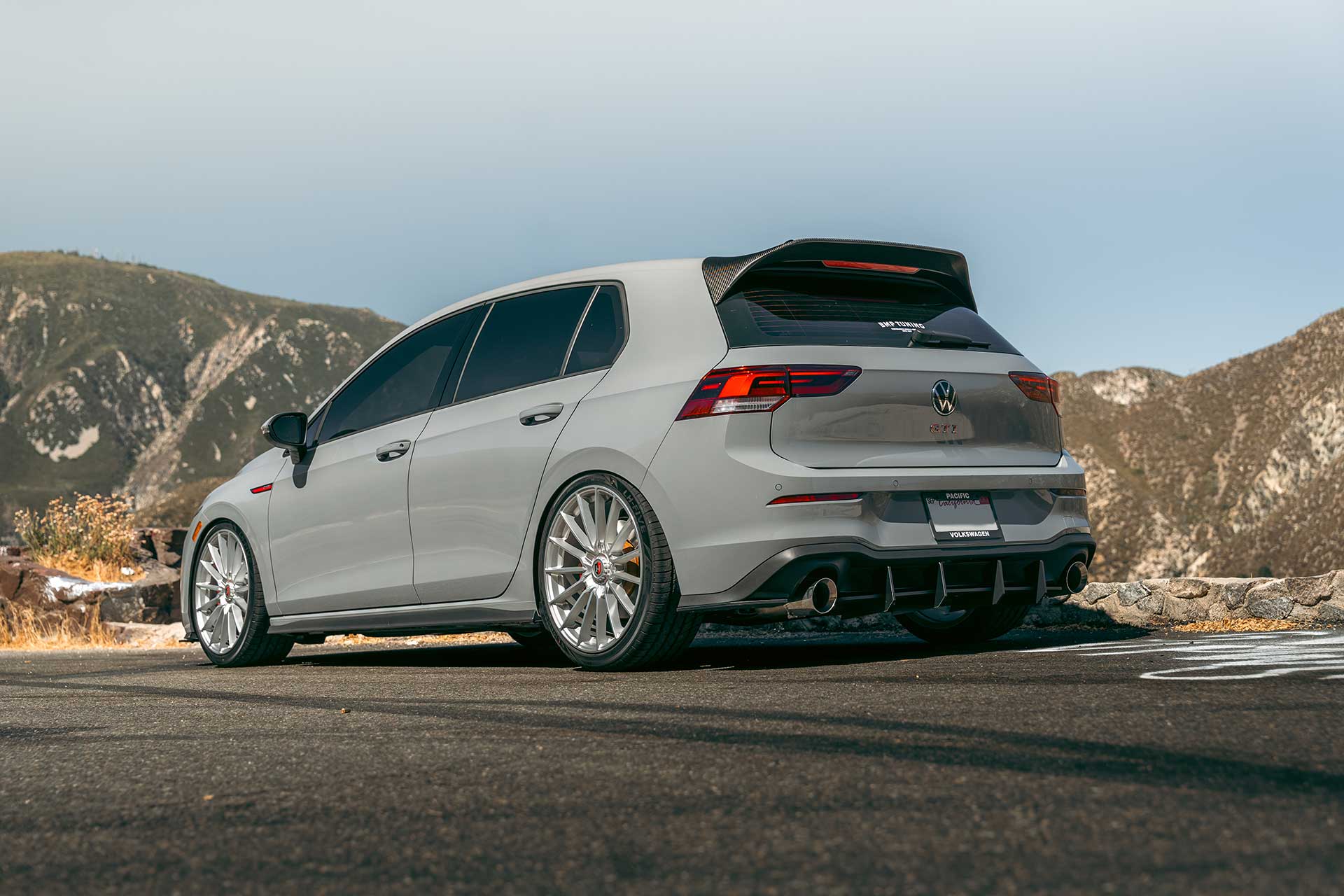
All-wheel drive is different. AWD systems expect the front and rear tires to roll at the same rate. If a staggered setup changes the rolling diameter between the axles, even by a small amount, the system reads it as constant wheel slip. Over time that can stress the center differential, transfer case, or clutch packs. The key is not the wheel width, it is the overall rolling diameter of the tire. You can absolutely run a staggered setup on many AWD platforms, as long as the front and rear tires keep a matched rolling diameter.
That is exactly the math you have to get right before you buy. Our AWD staggered fitment calculator checks front and rear rolling diameter so you can confirm a staggered setup is safe for your all-wheel-drive car before you commit to sizes.
Front-wheel drive is the odd one out. Staggered fitments on FWD are uncommon, because the front does the driving and the steering, so you want the wider tire up front, not in back. Most FWD builds run square for that reason.
Reverse Stagger Explained
Reverse stagger flips the script: wider wheels and tires on the front axle, narrower in the rear. You’ll almost never see this on the street. It shows up in specific FWD motorsport applications where the front tires handle both steering and power delivery, and the extra contact patch up front provides more traction where the car actually needs it.
For the vast majority of builds, reverse stagger isn’t a practical consideration. But if you’re building a dedicated FWD track car and chasing tenths, it’s worth knowing the option exists.
Getting Staggered Offsets and Tire Sizes Right
A staggered setup is not just two different widths. The front and rear often need different offsets too, because a wider rear wheel has to sit correctly under its own fender without poking or tucking too far.
Start from your factory numbers, then work out the front and rear separately. The wider rear typically takes an offset that keeps the larger wheel and tire clear of the fender and suspension, while the front is sized for steering clearance. If the offset terminology is new, our guide to wheel offset and ET breaks down how those numbers translate to where the wheel actually sits.
Tire sizing follows the same logic. On RWD, you have freedom to size the rear tire purely for grip and stance. On AWD, the rear tire has to stay within a matched rolling diameter of the front, which limits how aggressive you can go. Either way, confirm the complete picture with the wheel fitment calculator and run through the full fitment research process before ordering.
Your Drivetrain Dictates the Answer
Your drivetrain is the single biggest factor in this decision. Wider tires provide more grip, and you want that grip where it matters most based on how your car delivers power.
Rear-Wheel Drive
RWD vehicles are the ideal candidates for staggered fitments. The rear wheels handle all the power delivery, so wider rear tires help manage wheelspin, improve launch traction, and create a more planted feel under hard throttle. It’s why so many factory performance cars with rear-drive layouts ship with wider rears from the line.
That said, a square setup on a RWD car is far from wrong. Running wider front tires to match the rear reduces the tendency toward understeer, and for canyon driving or track days where cornering balance matters more than straight-line launches, a square setup delivers more predictable, neutral handling.
All-Wheel Drive
AWD adds complexity. Many AWD drivetrains distribute power through a center differential calibrated for matched tire circumferences. Significantly different tire sizes front to rear can cause drivetrain binding, premature differential wear, or trigger traction control warnings.
The critical metric is rolling diameter. Most performance AWD systems need the difference to stay under 1% between front and rear. A 255/35R19 front and 285/30R19 rear sit close enough in overall diameter to work on most systems, but a more aggressive width/aspect ratio split could push beyond acceptable limits.
Some performance AWD platforms do come factory-staggered with systems tuned for that difference. If your AWD car came staggered from the factory, running aftermarket stagger within similar specs is safe. If it came square, stick with square unless you’ve verified your drivetrain’s tolerance for diameter variance.
Front-Wheel Drive
FWD vehicles rarely benefit from traditional stagger because putting wider rubber on the non-driven rear axle doesn’t help where it counts. The front wheels handle both steering and acceleration, so narrowing the fronts relative to the rear actively works against performance.
Square is the standard recommendation. For FWD track builds, reverse stagger (wider fronts) is the only deviation that makes engineering sense.
Handling and Balance
The width difference between your front and rear tires directly influences handling balance at the limit. This comes down to contact patch physics and weight transfer.
Wider rear tires increase rear grip relative to the front. On a RWD car, that means less oversteer tendency under acceleration, which translates to a planted, stable feel exiting corners. The trade-off is at the front end. With proportionally less rubber up front, the front axle reaches its grip limit first, introducing a tendency toward understeer during aggressive corner entry.
For street driving, mild understeer is actually the safer behavior. For track driving where you’re chasing lap times, it becomes a limitation.
Square setups equalize the grip at both axles, producing more neutral handling. The car transitions through corners more predictably and rotates more willingly at the limit. This is exactly why serious track enthusiasts often move from a factory staggered setup to square, running the same wide tire all around to maximize total grip without biasing one end of the car.
Tire Rotation: The Overlooked Cost Factor
Tire rotation gets overlooked, and it has real cost implications over the life of your setup.
With staggered wheels, traditional front-to-rear rotation is physically impossible. A wider rear tire won’t fit on a narrower front wheel. Your only option is side-to-side on the same axle, and that only works with non-directional tires. Directional tires require dismounting, flipping, and remounting to swap sides, adding labor cost at every rotation.
In practice, rear tires wear faster on a staggered RWD car because they handle all the power delivery stress. Many enthusiasts report replacing rears roughly twice as often as fronts. That’s a meaningful cost increase over multiple sets.
Square setups allow standard rotation patterns: front-to-rear, cross, or any pattern your drivetrain calls for. This distributes wear evenly, extends tire life, and keeps things simple.
Speccing Offsets for Staggered Fitments
Getting offset right on a staggered setup takes more planning than square, because the wider rear wheel interacts with different fender geometry, suspension clearances, and mounting tolerances than the front.
Why Offsets Differ Front to Rear
Offset measures the distance from the wheel’s mounting surface to its centerline. On most cars, the rear fender arches have a different shape than the fronts, and suspension pickup points create different clearance envelopes. A wider rear wheel with the exact same offset as the front would sit further outboard, potentially extending past the fender or rubbing inner components. Running too much offset on a wide rear could tuck the tire inboard and cause contact with suspension arms during compression.
Some vehicles run the same offset front and rear despite a width difference, because their fender geometry allows it. Others need a 5 to 10mm offset shift between axles to keep everything positioned correctly. There’s no universal rule here, but getting the offset right front and rear is crucial. It’s vehicle-dependent, and that’s why checking verified setups through fitment guides and using a wheel fitment calculator before ordering is important.
Don’t just guess; it never ends well. Going through the full fitment research process, like pulling your OEM baseline specs to cross-referencing proven setups in forums and galleries helps more than you think. Even a few millimeters of additional poke can mean the difference between a clean flush fitment and one that requires fender work.
Why Wheel Weight Matters Here
Regardless of which configuration you choose, the weight of the wheels themselves plays a role in how the setup performs. Lighter wheels reduce unsprung mass, which helps your suspension react faster to steering inputs, road imperfections, and weight transfer during cornering.
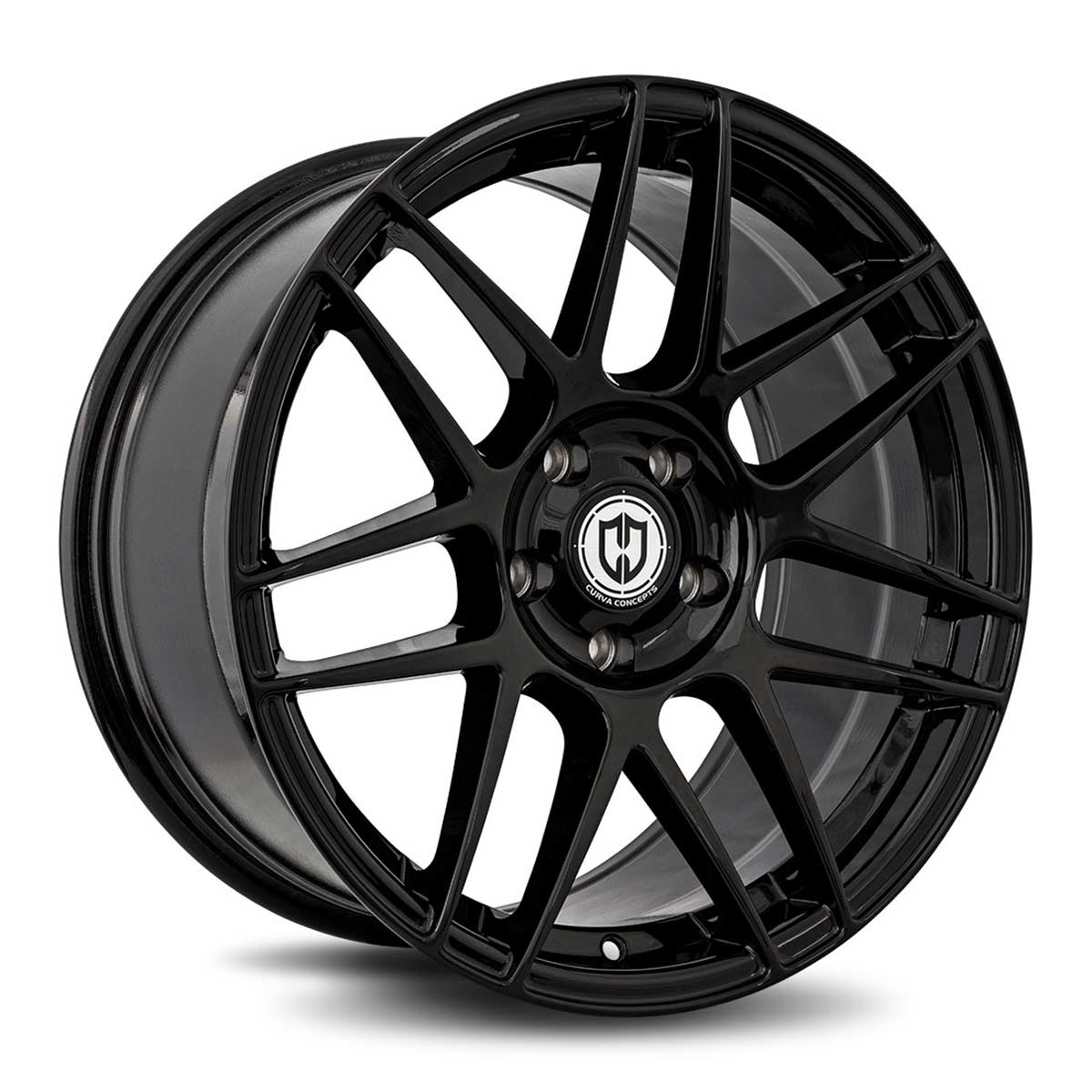
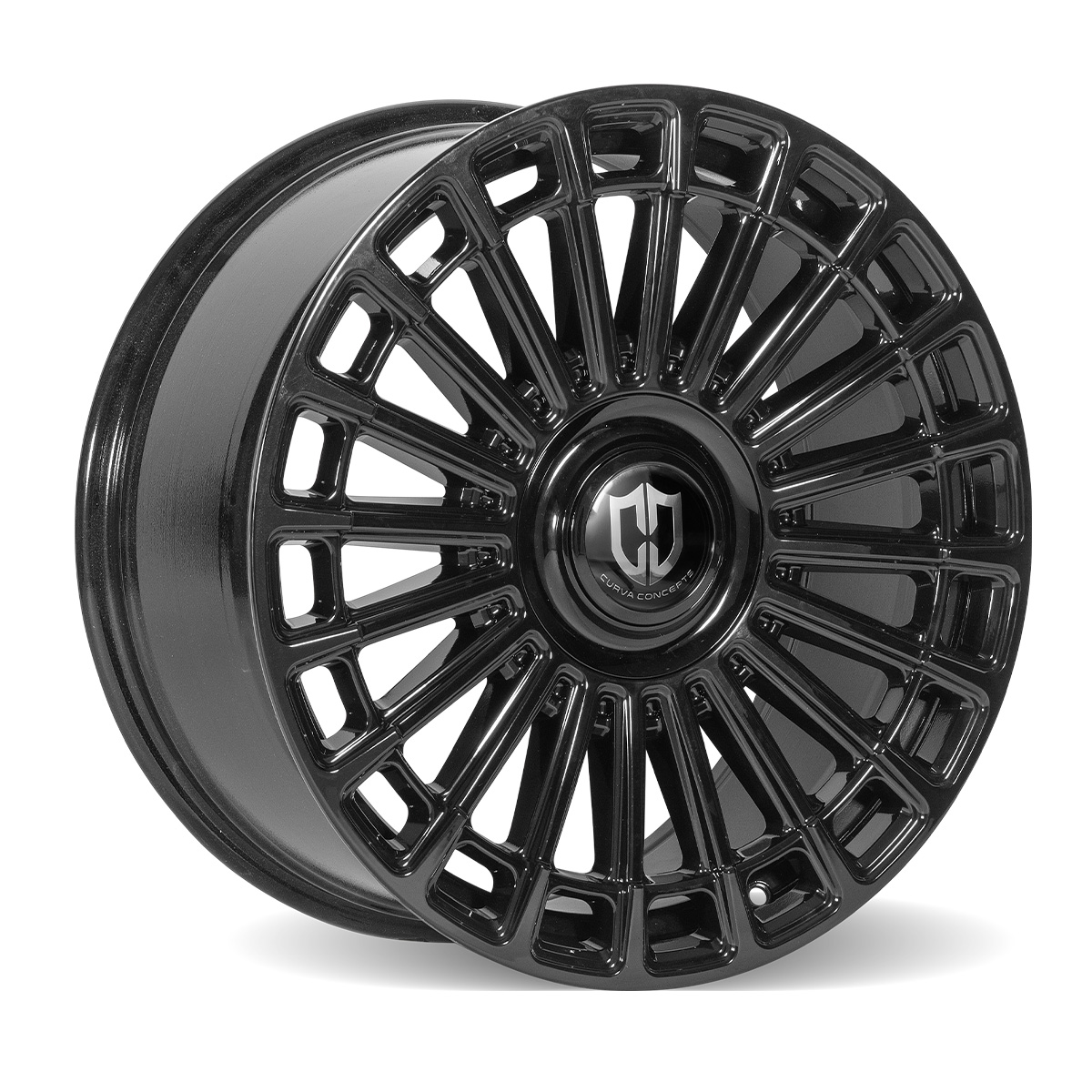
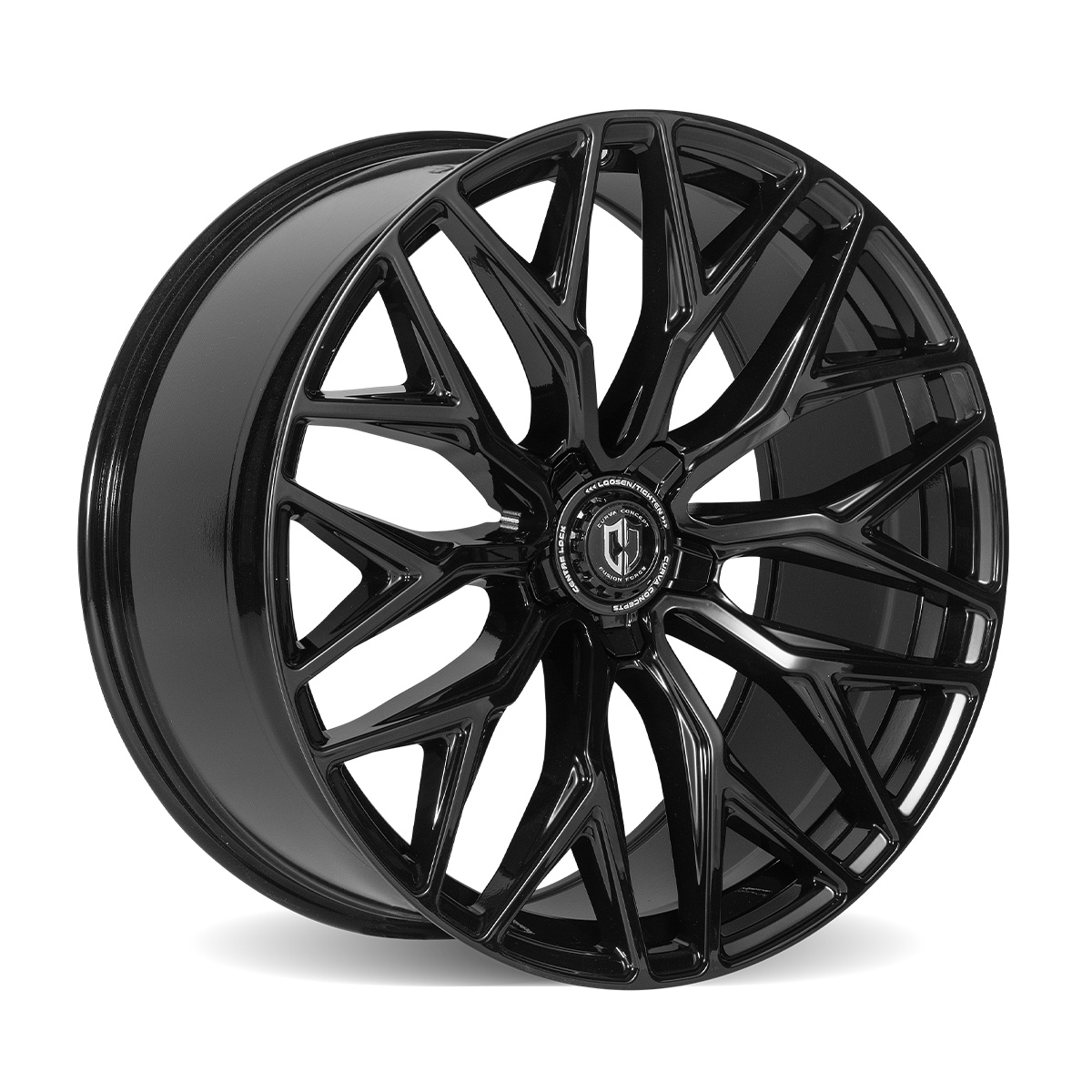
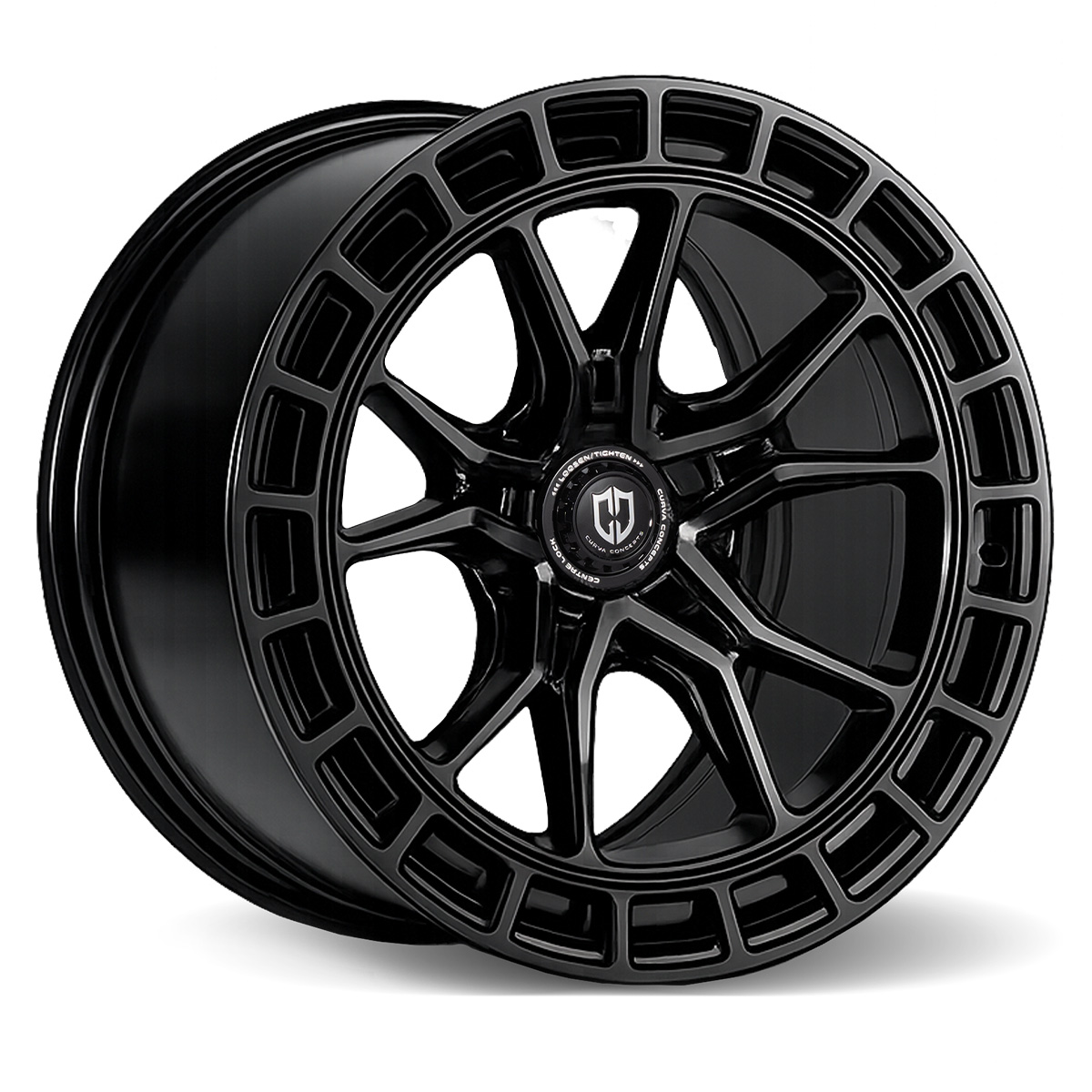
This compounds with staggered setups, where the wider rear wheel naturally weighs more than the front. The weight penalty of a wider rear is smaller on a flow forged wheel than on a comparable cast wheel, because the flow forming process creates a stronger, denser barrel using less material. Curva Concepts’ Flow Forged CFF series delivers approximately 15 to 25 percent weight savings over equivalent cast wheels while maintaining the strength needed for aggressive street and light track use.
The CFF lineup spans 18 to 22-inch diameters with staggered width and offset combinations engineered for popular 5-lug applications, all designed and engineered in Los Angeles. Check the vehicle gallery to see how both staggered and square CFF setups look on real builds.
Frequently Asked Questions
Can you rotate tires with staggered wheels?
Not front to rear. Different tire sizes mean they can't swap between axles. Side-to-side rotation on the same axle is possible with non-directional tires. Plan on replacing rears more frequently, especially on RWD cars.
Can you run staggered wheels on AWD?
Yes, on many AWD platforms, as long as the front and rear tires keep a matched rolling diameter. Mismatched diameters can damage the driveline. Use our AWD staggered fitment calculator to check before you buy.
Do staggered wheels cause understeer?
They can. Wider rear tires relative to narrower fronts shift the grip bias rearward, which means the front axle can reach its limit first. On the street, that's a stability benefit. On the track, it's a limitation that square setups address.
What offset do I need for staggered wheels?
It varies by vehicle and wheel width. Wider rears often need a different offset than fronts to maintain proper fender clearance. Use a fitment calculator and cross-reference verified setups from fitment guides to find the right combination for your car.
Is a staggered setup better than square?
It depends on the goal. Staggered gives a rear-drive car better straight-line traction and a more aggressive stance. Square is better for grip balance, tire rotation, and track use because all four tires wear evenly and can be swapped. Neither is universally better.
Can you rotate staggered tires?
Not front to back, since the sizes differ. You can only rotate side to side, and only if the tires are not directional. That faster, uneven wear is one of the real trade-offs of a staggered setup.
Do staggered wheels affect handling?
They can. A wider rear adds rear grip, which can shift the car toward understeer at the limit. For most street driving the effect is mild and the traction and looks are the bigger story.
Ready to spec a staggered set? Check fitments for your vehicle or send your specs to our fitment team and we will confirm the front and rear sizes that work.